


 There is a way to design Career and Technical Education (CTE) programs so they better align with the job market in your community — both the market of today and the market of tomorrow — rather than creating programs that are “close enough” to those jobs. It’s called the Backward CTE Pathway Model, and, as Realityworks Educational Development Manager Diane Ross discussed in her recent webinar, “Creating a Backward CTE Pathway Model,” this model prioritizes students’ needs when creating programs.
Then, students are aligned to longer-term careers, rather than creating programs and aligning them to a certificate that might or might not meet labor market needs. Integrating hands-on simulation to develop skills is a key part of this model.
Read on (or watch Diane’s complete webinar on-demand) to discover a new take on the guided pathway approach to CTE program planning and learn how you might integrate this model into your district.
What Is a Backward CTE Pathway Model?
The Backward CTE Pathway Model is a new take on the guided pathway approach to CTE program planning. The guided pathway approach is meant to give college students a true path toward a viable career by addressing inequities in education opportunity. As Diane discusses in her webinar, the Backward CTE Pathway Model engages high school students in their career planning by showing them the possible paths toward a rewarding career and integrating hands-on simulation at the secondary school level. This allows students to experience skills they might not have considered.
Key Benefits of this model include:
- Helping students to develop their interests and aptitudes into rewarding careers
- Creating CTE programs that put student and labor needs at the forefront, easing them into higher education or training
- Engaging students at new levels and assessing their skills in experiential learning simulation
Why the Backward CTE Pathway Model Works for Modern Students
Modern students are leaders in their own learning. These students may have already taken an active role in investigating the kinds of careers they’re interested in and talking to individuals in those fields, giving them an idea of what they should focus on. They question everything and always want to know why they should learn what you’re teaching – in fact, they will tune out if they do not see the relevance of what they’re learning. As Diane discusses in her webinar, the Backward CTE Pathway Model gives students a better understanding of their career trajectory and helps them connect what they are learning to potential careers.
In her webinar, Diane recommends taking steps to instill inner motivation and self-discipline in students by getting them to choose a whole career path, rather than one job. They then need the discipline to follow that path upward. The Backward CTE Pathway Model helps with this by giving students a clear sense of direction and an understanding of how they’re getting there, while building the skills they need via experiential learning.
Ways To Integrate Experiential Learning Into Your School
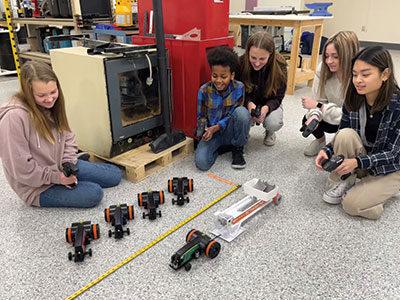
When adding hands-on learning to your CTE programs, make sure you’re introducing students to new skills and giving them ample time to practice them. Assessments can also be helpful in letting students know how they’re progressing with these skills. Integrating simulation throughout the curriculum is a wonderful way to keep students engaged and excited about what they’re learning. Let’s look at some experiential learning tools you can implement into your courses.
Health Science
The health care field is projected to add more jobs than any other occupational group with a 16% increase in employment within the next 10 years. Careers in this field include paramedics, athletic trainers, EMTs, and so many more. Students interested in health sciences need to experience as many healthcare-related careers as they can to see a clear life path for themselves. These students will need good problem-solving and critical thinking skills so they can better handle the day-to-day challenges in this field.
The best way to expose students to health science careers while building their soft skills is to incorporate experiential learning simulations and tools into your curriculum. You can even use a ready-made pathway package, such as our Certified Nursing Assistant Package or Sports Medicine Pathway Package, to get your students started on their path to success. Another great option for starting or revamping a health science pathway program is our Geriatric Package which includes 21 hands-on resources and curricula.

Agriculture
Technology developments in agriculture have increased productivity in this field. Individuals in these careers have an opportunity to make a good income especially if they’re involved in cattle and swine agriculture.
Experiential learning tools are a fantastic way to get students exposed to agriculture careers without ever putting the students or any animals at risk. They also give students in cities the opportunity to experience these jobs without taking any long field trips into rural areas. For example, our Bovine Skills Bundle can teach students about anatomy, artificial insemination, and more with a variety of experiential learning tools. If you want to focus more on the plant science side of agriculture, Realityworks’ Hydroponics Plant System Package includes nine hands-on resources as well as curricula, presentation slides, activities, and assessments.
Family & Consumer Sciences
Child care is a field that’s in need of workers right now which affects the entire working population as more parents stay home to care for their kids. This is a career field where students will have to deal with many complicated regulations and rules; they’ll need special education and training to prepare them for this. For example, knowing how to design, create, and maintain a child care center for a specific age group while following all necessary regulations is an important aspect of this career.
Our Education and Training Pathway Package has the perfect tools to get students thinking critically about how to design a center and all that’s involved in the process. It introduces students to the idea that early childcare is a viable career option for them. Of course, the key to any childcare career is properly caring for children, especially infants. Realityworks’ Small Early Childhood Care and Service Package helps students learn and understand the complex needs of a baby. We also have a Culinary Kits Bundle for students interested in the food science aspect of Family and Consumer Science.

Additional Resources
If you’re looking for more information on integrating the Backward CTE Pathway Model into your CTE program planning efforts, consider these resources:
- Explore all of the pathway packages we offer for CTE programs. Custom pathway package options are available as well.
- Watch Diane’s complete webinar, “Creating a Backward CTE Pathway Model,” on-demand anytime: